
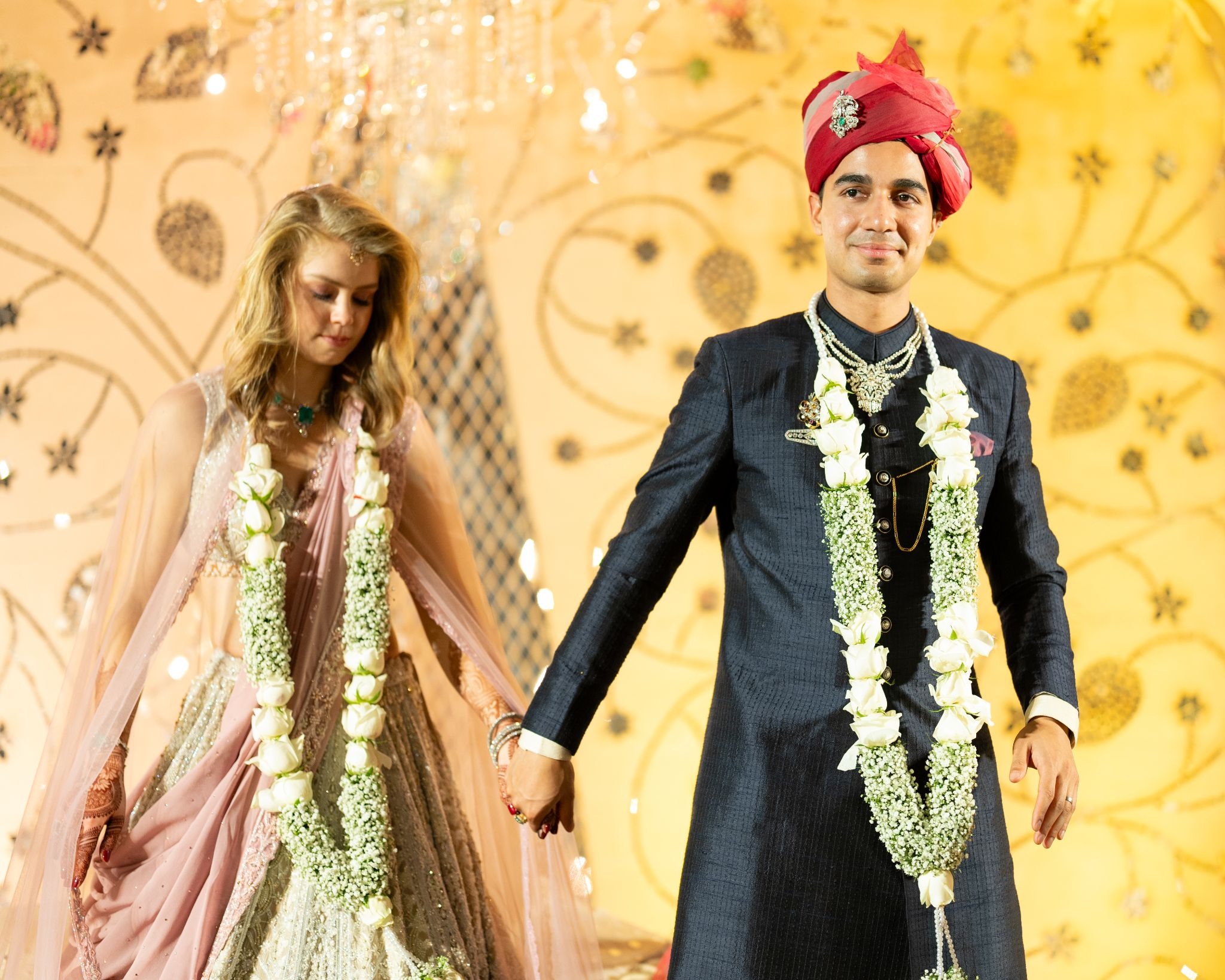
Hand in hand, wrapped in garlands — the first steps of forever.
In the Hindu tradition a marriage is sealed by seven steps taken together around a sacred fire long before any ring or signature enters the picture. Each step carries a vow meant to outlast a lifetime. This is Saptapadi the ritual that turns a ceremony into a lifelong bond both in law and in spirit.
Picture the ceremony itself: the entrance draws the applause, the reception fills the dance, floor yet the marriage actually happens beside the fire in a quieter corner of the day. A length of cloth binds the couple’s hands together, an old symbol carrying an older truth: from this moment on wherever one walks the other walks beside them.
Together they face the sacred fire Agni and begin the seven steps.
This tradition is commonly known as Saat Phere. Its formal name Saptapadi is Sanskrit for “seven steps”, a tradition old enough to trace back to the Rig Veda, refined further through the Grihya Sutras in the centuries that followed. What escapes most onlookers is the weight folded into each gesture: every step is a vow spoken with full intention.

A thousand years of tradition, one new beginning.
The groom leads the first four steps, the bride’s hand resting lightly in his. Then quietly she takes the lead for the remaining three, a reminder that a marriage asks both people to lead at different moments in different ways. But these seven steps are not simply movements around a sacred fire. Each one carries, a promise touching a different part of the life the couple is choosing to build together.
What Each Step Is Really Asking
From the outside, the seven pheras may look like a simple ritual, but each step carries a deeper meaning.Together they move through the essentials of a marriage: being cared for finding strength, building a life creating a home, growing a family standing together through difficult seasons and finally becoming friends and companions for life.
First Phera: Nourishment
Before anything else this vow is a promise to make sure the other person is fed sheltered and cared for on the ordinary days, long after the wedding lights have dimmed. It’s the least romantic promise of the seven and possibly the one a marriage leans on hardest.
Second Phera: Strength
This vow asks for the willingness to keep showing up, year after year especially through the hard ones. It asks for a partner who stays regardless of what comes.
Third Phera: Prosperity
Read as a promise about money this one’s easy to skim past. Read closer, it’s a promise about how two people will build something together: honestly patiently with generosity given freely on both sides.
Fourth Phera: Comfort
The last vow the groom leads is the simplest to say and one of the hardest to keep: that home with this person will feel safe. Somewhere in the crowd a mother quietly wipes her eyes; she knows exactly what’s being promised here.

She steps ahead to lead this vow
Fifth Phera: Family
The first vow the bride leads turns the couple’s gaze outward, towards children if they choose them, towards the family they’re becoming part of,towards everyone gathered at the edge of the firelight. Marriage this step says, always reaches beyond the couple themselves.
Sixth Phera: Endurance
Simply put: I’m here for every season, the easy ones and the hard ones alike. This vow asks for a partner who stays present through illness, disappointment and the ordinary weight of years, the good ones included.
Seventh Phera: Friendship
Many priests consider this the vow that brings everything together.Strip away the ritual ,the fire, the crowd and what’s left is the simplest test of all:Will you still show up for each other decades from now, when life is no longer about grand moments, but ordinary Tuesdays?” As the final round completes, two people become husband and wife.
Why Seven
The number arrives already carrying weight. It shows up throughout the tradition: the seven chakras said to move through the body ,the seven sages known as the Saptarishi, seven worlds charted across Hindu cosmology and seven notes structuring an entire musical scale. In this tradition seven has always stood for something complete. Fitting for a set of promises meant to hold an entire life.
Beyond What the Eye Sees
Most guests watching this see a beautiful tradition and they’re right, it is. Fewer stop to notice that they’ve just watched someone make seven specific considered promises out loud in front of everyone who loves them most.
By the time the seventh step lands the bride and groom are still the same two people who arrived an hour earlier. And yet something has shifted. The photographs will capture the moment beautifully: smoke curling upward hands still bound in cloth. The seventh step carried the promise into permanence.
Planning a ceremony that honors tradition while still feeling entirely your own? Connect with Encore, The Eventsmiths and let’s weave meaning into every ritual alongside the visuals.